V-Day Benefit Committee
The Vagina MonologuesThe V-Day Benefit Committee is the volunteer organizing body behind V-Day’s first benefit performance and the early expansion of the movement. Its work joined practical event production to a larger purpose: using The Vagina Monologues to bring violence against women into public view, raise funds, and encourage communities to act. After the 1998 benefit, the committee carried that purpose into colleges and universities, making the performance a starting point for locally directed awareness and support.
Formation and Structure
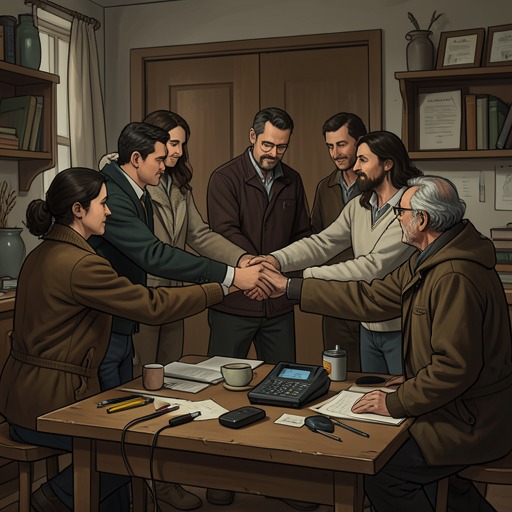
The committee emerged from a meeting between activist women, including members of Feminist.com, and Eve Ensler, whose goal of stopping violence against women overlapped with theirs. The account describes its formation as an outcome of the meeting rather than a formal institution imposed from above. Its membership grew through invitation: each woman invited others, who in turn brought in additional participants. That expanding chain gave the committee a networked structure and linked its organizing to the wider group of women drawn to the project.
The committee’s first project was V-Day 1998, planned as the launch of a movement as well as a benefit. The group’s responsibilities grew with the demands of producing the event. One volunteer describes beginning as a regular volunteer, becoming the committee’s secretary, and serving as coordinating producer by curtain time. That progression captures the committee’s practical character: roles developed alongside the work required to bring the performance to the stage.
The First V-Day Benefit
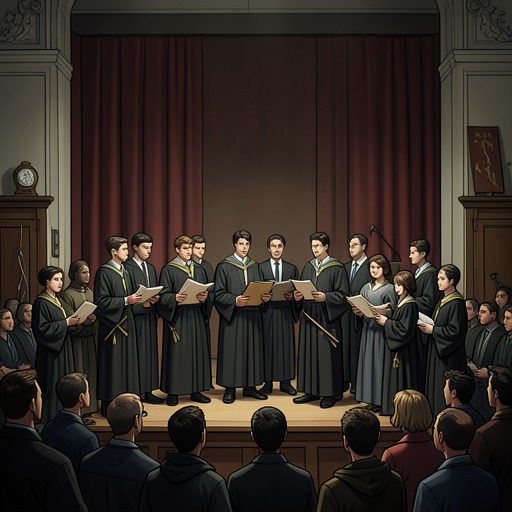
The committee’s inaugural project was a celebrity benefit performance of Eve Ensler’s The Vagina Monologues at New York City’s Hammerstein Ballroom. The performance sold out, while hundreds of people continued to gather outside hoping to enter. The crowd’s presence made the benefit more than a theatrical occasion: people wanted to participate in the public launch of V-Day, even when the venue could not accommodate them.
Inside, the audience brought together men and women, students and businesspeople, mothers and activists. Their responses ranged from laughter and gasps to silence, tears, and cheers. The committee’s account emphasizes that the audience understood the performance’s message and received it openly. The event therefore worked through both organization and live encounter: the committee made the gathering possible, while the audience’s varied reactions turned the theater into a shared public response to the subject of violence against women.
The success required substantial work and dedication, and the committee found its responsibilities increasing as demand grew. Even the event’s public presentation involved negotiation: a newspaper that had declined to run a paid advertisement because it considered the logo too suggestive eventually accepted an altered version, then described the event as the hottest ticket in town. The episode shows how the benefit’s visibility had to be built amid resistance to its imagery, while its eventual popularity made the campaign difficult to ignore.
From Benefit to Local Action
After the first benefit, the committee met to celebrate its success and consider what could be improved. For the first time in a year, there was no imminent event to prepare for. That pause also brought a change in perspective: one participant heard the women she had come to know as strong and brilliant speak about doing whatever they could to change the conditions that enabled violence against women. The meeting turned the experience of producing a successful event toward the question of what should follow it.
The committee concluded that raising awareness was a necessary first step in addressing a social problem and chose local outreach as its goal for 1999. It devised the V-Day College Initiative, inviting colleges and universities to stage The Vagina Monologues on Valentine’s Day. Proceeds were to return to the schools’ communities through organizations working to stop violence against women. A committee member volunteered to direct the project, extending the group’s work from one large benefit into a plan for many locally organized events.
Although participating schools staged the same play, their events differed in scale and form. Some held intimate readings; others created larger theatrical and social occasions. Many added resources and activities, including post-performance Vagina Dialogues, sexual-assault counselors, fundraisers, parties, music, art, and dance. The committee’s approach thus preserved a common performance while allowing schools to connect it to the needs and capacities of their own communities.
Challenges, Participation, and Legacy
The College Initiative also brought the campaign into contested settings. During the 2000 initiative at Washington University in St. Louis, fraternity members posted antagonistic flyers and threatened to disrupt the event. The student director responded by inviting them to attend the production. The account presents this decision as turning an intimidating situation toward constructive engagement, an example of how the initiative could create opportunities for encounter as well as raise money and awareness.
The committee’s organizing reached beyond the initial benefit into events shaped by local participants. At one performance, organizers reported a standing ovation at the 4 p.m. show and used a visual statistic at the start: audience members given stickers stood to represent a stated statistic about sexual violence against girls. Proceeds were designated for three Arizona organizations: the Arizona Coalition Against Domestic Violence, the Arizona Sexual Assault Network, and Decolores, described as Arizona’s only bilingual domestic-violence shelter. The example makes the committee’s broader method concrete: performance, audience participation, fundraising, and support for community organizations were brought together in a single event.
The committee’s significance lies in that movement from coordination to mobilization. It helped launch V-Day with a crowded, highly visible benefit, then organized a model that campuses could adapt while directing proceeds to local organizations. Its expanding invitation-based membership and increasingly varied responsibilities supported a campaign whose stated mission was to end violence against women through awareness, events, media, and funds for organizations working to ensure women’s safety. The committee appears in the book’s acknowledgments as the V-Day Committee, a final indication that the organizing body remained part of the project’s wider community.